Showing posts with label Vietnam. Show all posts

30 May 2007

Naval Aviator Missing In Action From the Vietnam War Identified


NEWS RELEASES from the United States Department of Defense No. 672-07 IMMEDIATE RELEASE May 30, 2007

The Department of Defense POW/Missing Personnel Office (DPMO) announced today that the remains of a U.S. serviceman, missing in action from the Vietnam War, have been identified and will be returned to his family for burial with full military honors.

He is Lt. Michael T. Newell, U.S. Navy, of Ellenville, N.Y.He will be buried today in Arlington National Cemetery near Washington, D.C.

On Dec. 14, 1966, Newell was flying an F-8E Crusader aircraft as wingman in a flight of two on a combat air patrol over North Vietnam.During the mission, the flight leader saw a surface-to-air missile explode between the two aircraft.Although Newell initially reported that he had survived the blast, his aircraft gradually lost power and crashed near the border between Nghe An and Thanh Hoa provinces in south central North Vietnam.The flight leader did not see a parachute nor did he hear an emergency beacon signal.He stayed in the area and determined that Newell did not escape from the aircraft prior to the crash.

Between 1993 and 2002, joint U.S./Socialist Republic of Vietnam (S.R.V.) teams, led by the Joint POW/MIA Accounting Command (JPAC), visited the area of the incident five times to conduct investigations and survey the crash site.They found pilot-related artifacts and aircraft wreckage consistent to an F-8 Crusader.

In 2004, a joint U.S./S.R.V. team began excavating the crash site.The team was unable to complete the recovery and subsequent teams re-visited the site two more times before the recovery was completed in 2006.As a result, the teams found human remains and additional pilot-related items.

Among other forensic identification tools and circumstantial evidence, scientists from JPAC also used dental comparisons in the identification of the remains.

The Rest of the Story...

(From the entry for LT Newell at The Virtual Wall)

On 14 Dec 1966 a Navy ALPHA strike from the USS TICONDEROGA was targeted against a vehicle depot at Van Dien, about 5 miles west of Hanoi. As usual, fighters were tasked with providing combat air patrol over the target area while the bombers worked the target.

While over the target LT Michael Newell, flying F-8E BuNo 149148, was hit by fragments from an SA-2 surface to air missile. LT Newell advised his flight lead that his aircraft was handling well, turned south to egress the target area, and began a climb from the 6,000 foot CAP orbit to a higher altitude. A few minutes later he advised that he had lost hydraulic pressure, and comrades watched helplessly as his Crusader entered into uncontrolled flight and dove into the ground from an altitude of about 17,000 feet. Newell did not eject before ground impact; since he was not injured by the SA-2 impact it may be that G-forces due to uncontrolled flight prevented him from ejecting. His remains have not been repatriated.

TICONDEROGA lost a second aircraft during the strike; LT Claude D. Wilson of Attack Squadron 72 (A-4E BuNo 151068) was hit by an SA-2 after departing the target area but stayed in the air. As he neared Thanh Hoa, he was hit a second time and his A-4E exploded in flight. LT Wilson's remains were repatriated in 1989.

LT Newell's flight on 14 December was part of Operation ROLLING THUNDER. Operation ROLLING THUNDER was a gradual and sustained U.S. 2nd Air Division (later Seventh Air Force), U.S. Navy, and Republic of Vietnam Air Force (VNAF) aerial bombardment campaign conducted against the Democratic Republic of Vietnam (DRV or North Vietnam) from 2 March 1965 until 1 November 1968, during the Vietnam War.

The target CVW 19 was engaged on that day was the Van Dien supply depot/barracks, target number 62 on the JCS-94 target list. Since it was in the vicinity of Hanoi, it resided under one of the most lethal anti-aircraft zones seen since the notorious flak/fighter corridors over Germany in WW2. The layered defense ranged from widely emplaced ZSU-23/4 cannon to anti-aircraft artillery for medium altitude up to SA-2 GUIDELINE missiles to cover the ingressing/high-altitude threat. All told, CVW-19/TICO would lose 14 aircraft to combat related action during the Oct.19, 1966 - May 29, 1967 deployment, with an additional three operational losses.

LT Newell Remembered

(from a 30 May 2007 article in the Times Herald-Record, serving New York"s Hudson Valley and the Catskills. This is an excellent article and it is recommended in entirety - the portion quoted below was particularly compelling - it serves as a reminder of what small town newspapers are really all about, people and those they have touched or affected over the years, something missing in the bigger national papers - SJS)

Mike Newell: A Reminiscence by His Friend Bob Kelb

Mike and I became good friends in grade school. We were both stubborn and had tempers. This would occasionally get the best of us, and we would have a fight. But I don't think we ever went more than a half hour before one or the other of us would call, apologize, and we would be back on the best of terms. Our friendship grew thru junior high, high school and in later years. When Mike first started to think about entering a service academy, I wasn't sure how he would manage in that environment. I was concerned about his temper (I never told him this). He worked hard to get his appointment to Annapolis. As a midshipman, he thrived in that difficult environment.

Mrs. Newell's brother was an Air Force B-52 bomber pilot and Mike was always interested in planes and flying. When we were growing up, we went to as many air shows as we could at Stewart Field.


One of his summer midshipman cruises was to the Mediterranean, during a NATO exercise. On returning, he mentioned how many pilots were lost during this exercise. As he approached graduation, he was considering both submarines and flying. I remembered the statistics from his Med. cruise, and suggested subs would be a good choice.

But flying was Mike's dream, and he went on to become a carrier pilot. His dream became his passion. (I just recently had a tour of a nuclear attack sub, the USS Albany. I think he made the right choice.) The only time I have been somewhat afraid in an airplane, Mike was at the controls. He had graduated from flight school and was flying an F8-U Crusader. Home on leave, he decided we should go to Wurtsboro Airport, rent a plane and fly over (aka buzz) his girl's (soon to be his wife Mimi's) house in Kerhonkson. Mr. Barone, the owner of the airport, went up with Mike to check him out in the Aeronca. On Mike's first pass at landing, he must have thought he was landing an F-8 on a carrier. He came in with power on. Mr. Barone did a lot of arm waving and Mike went around again and made a fine landing. Mr. Barone got out, Mike motioned to me to get in, and off we went. Well, the Aeronca looked much like a Piper Cub and was about as fast. It was much too slow for someone who had broken the sound barrier. He knew what the redline on the tachometer was for, but several times I had to remind him. I must say that his third landing in the Aeronca was at least as good as his second.

In the fall of 1964, I was in Army basic training at Fort Dix, N.J. I was summoned to report to the company commander in the orderly room. The CO told me that Lt. Michael Newell had called and requested that I be given a weekend pass so I could be an usher in his wedding. I had a good time at Mike and Mimi's wedding, dressed in my buck private's uniform, white gloves and shirt, and a black bow tie.
The last time I saw Mike, was at Mimi's parent's home in Kerhonkson. He was home on leave between tours in Viet Nam. He talked about some of his missions and how he wanted to get a MIG when he returned.

I was once again in uniform for the memorial service that was held for Mike at St. Mary's and St. Andrew's church in Ellenville. It seemed so necessary and so incomplete.


Mike, I still think of you and remember our good friendship. Welcome Home! Rest in Peace!

Indeed LT Newell, welcome home now and rest in peace - your journey is complete...


29 January 2007

Navy Aviator Missing In Action From the Vietnam War Identified


NEWS RELEASES from the United States Department of Defense

No. 104-07 IMMEDIATE RELEASE
January 29, 2007

The Department of Defense POW/Missing Personnel Office (DPMO) announced today that the remains of a U.S. serviceman, missing in action from the Vietnam War, have been identified and will be returned to his family for burial with full military honors.

He is Navy Cmdr. Peter Mongilardi Jr., of Haledon, N.J. He will be buried on April 11 at Arlington National Cemetery near Washington D.C.

On June 25, 1965, Mongilardi departed the USS Coral Sea in his A-4C Skyhawk on an armed reconnaissance mission over North Vietnam.His flight encountered bad weather and enemy fire over Thanh Hoa Province, causing the wingman to lose visual and radio contact with Mongilardi.Contact was never re-established and the aircraft failed to return to the carrier.

In 1993, a joint U.S.-Socialist Republic of Vietnam (S.R.V.) archival team, led by the Joint POW/MIA Accounting Command (JPAC), obtained information concerning the crash while researching documents, artifacts and photographs at the Central Army Museum in Hanoi.Later that year, another joint U.S./S.R.V. team conducted an investigation in Thanh Hoa Province.The team interviewed two local Vietnamese citizens who recalled the crash and said the pilot died in the impact.The men then led the team to the crash site.

In 1994, another joint team excavated the crash site and recovered human remains and pilot-related items, including a belt tip, boot heel, pieces of flight boot and other items worn by the pilot.

Among other forensic identification tools and circumstantial evidence, scientists from JPAC and the Armed Forces DNA Identification Laboratory also used nuclear DNA in the identification of the remains.

The Rest of The Story...

VA-153 Log Entry:
June 25, 1965: Commander P. Mongilardi United States Navy was shot down in A-4C Skyhawk BuNo. 149574 NL 306 by North Vietnamese triple A fire. Commander Mongilardi was Killed in Action.

The Action:

Synopsis: Air Wing 15 deployed to Southeast Asia in November 1964 onboard the aircraft carrier USS CORAL SEA, participating in FLAMING DART's two raids in retaliation to North Vietnamese aggression in the Gulf of Tonkin. One of the attack squadrons in Air Wing 15 was the Blue Tails - Attack Squadron 153, so named because of the splash of blue on the tails of their A4 Skyhawks. CDR Peter Mongilardi Jr. was the skipper of VA 153 until May 1965, at which time he assumed duties as air wing commander (CAG), and was replaced by CDR Harry E. Thomas. Before the long cruise was over in December, both Mongilardi and Thomas were dead.

It was during this period that the North Vietnamese, assisted by the Soviet Union and Chinese, was beginning to build its military from technology-poor and ground-oriented military to one with one of the world's strongest and most sophisticated air defense networks.

As a defense against U.S. air strikes over North Vietnam (ROLLING THUNDER) North Vietnamese missile sites grew from ground zero in 1965 to estimates three years later of two hundred surface-to-air (SAM) sites nationwide and some thirty missile battalions in the Hanoi area alone. Each battalion contained up to six missile launchers plus accompanying radar, computers and generators. The U.S. discovered the first SAM site in April 1965, yet U.S. pilots were forbidden to take immediate defensive action.

The CORAL SEA was in Japan in June 1965 on its way to the U.S. The ordnance and aircraft had already been offloaded, and Thomas and Mongilardi were on a last liberty together. While on liberty, they discovered they were shipping back to Vietnam.

On the first day back, Mongilardi and his wingman, Paul Reyes, flew on an armed reconnaissance mission. CDR David Leue and his wingman were briefed at the same time in case one of the wingmen went down, and, as luck would have it, Leue's wingman could not transfer his drop tank and was sent back to the ship. Leue joined up with Pete and his wingman. Leue describes armed "recce" as "usually two people flying down a route, really target practice for the local AAA batteries as you come down the pike. I always said if I made it to admiral I would not have done traditional armed recce. To(o) many people are lost."

The three pilots were in the area of Thanh Hoa. Leue was flying with instrument problems, and had no air speed altimeter or pressurization. It was no problem except for determining the flight altitude. Through some broken clouds, Leue spotted a power plant below and radioed that he was rolling in on it. Mongilardi ordered him not to hit the plant because it was denied under the rules of engagement.

By this time, Leue had pulled away from Mongilardi and his wingman, and he turned to rejoin them. As he did, Mongilardi radioed, "I'm rolling in on a little bridge," followed by, "Flak." Leue heard Mongilardi get hit and said, "He actually keyed the mike, I heard a couple of deep breaths, and I called Reyes to ask 'Where are you?' Paul said, 'We're by this rain storm and I've lost CAG [Mongilardi]. I don't know where he is.' Well, he'd been shot and killed; a real tough loss."

Leue was saddened to lose Mongilardi, whom he described as "a superior air wing commander, naval officer and warrior." It was less than two months later, on August 13, 1965, when CDR Harry Thomas was shot down 70 miles west of Hanoi on a low-level strike mission searching for SAM sites. Thomas' aircraft flew into a volley of flak, was hit and crashed. Thomas did not survive. Leue was moved into the position of skipper of the Blue Tails, carrying with him the sadness of having lost two superior squadron commanders.

CDR Mongilardi was originally classified Killed in Action, Body Not Recovered. He was listed among the missing because his remains not found at the time.

(Source: http://www.pownetwork.org/bios/m/m431.htm)

The Recovery:

Peter Mongilardi's last known location was approximately 13 miles (22 kilometers) northwest of Thanh Hoa, 3 miles (9 kilometers) northeast of Kien Trung, ½ mile (1 kilometer) south of Mao Ax and 24 miles west of the coastline, Dong Son District, Thanh Hoa Province, North Vietnam. The two remaining flight members initiated an immediate search for their flight leader over a heavily populated open flat area crisscrossed with numerous creeks, rivers and rice fields. They saw no parachute either in the air or on the ground and heard no beeper signal.

Over the next 2 to 3 days an extensive search and rescue (SAR) effort was conducted over the original search area and then extended to include the jungle covered mountains to the north and west of the target area. Air assets used in this massive operation included 15 - A1H's, 10 - F8's, 3 - A3D's and 2 - F4's.

Because of the last known heading of Cmdr. Mongilardi's Skyhawk, 70% of the entire SAR area consisted of dense jungle growth and only 30% over the area inundated with water. At the time formal search efforts were terminated, Peter Mongilardi, Jr. was listed Missing in Action. On 19 July 1965, conclusive evidence of death was received and on 23 July Cmdr. Mongilardi's status was changed to Killed in Action/Body Not Recovered. What that conclusive evidence was comprised of is unknown.

During the July 1985 technical meeting between US and Vietnamese personnel discussing the fate of American POW/MIAs, Mr. Cu Dinh Ba, Chief of the Vietnamese Office Seeking Missing Persons, stated his office's personnel had investigated this incident. During the investigation, local residents recalled the crash of an A4C on 25 June 1965. (N)o remains were available to inter...no identification media was found in or near the Skyhawk's wreckage.

In June 1993, Mr. Ba's report was passed to the Vietnamese government in a briefing folder along with other relevant documents during a meeting in DaNang because the Office for Seeking Missing Persons was going to assist in the joint recovery effort of this crash site. Shortly thereafter a site survey was conducted to evaluate the feasibility for excavating the area in the hope of recovering Peter Mongilardi's remains.

In October 1994, a joint American/Vietnamese team under the auspices of the Joint Task Force for Full Accounting (JTFFA) fully excavated this crash site. They found and recovered pieces of aircraft wreckage, pilot related items, life support equipment and 4 bone fragments - the largest of these bone fragments is less then 2½ inches long. The 4 bones are "consistent with being human," but cannot be confirmed to be human. If human, they are believed to be from the long bones of either the arms or legs.

Because they are so small, mtDNA technology is not advanced enough to be used in the identification process. The hope is that technical advances in the future will yield the ability to identify these bone fragments and determine conclusively if they constitute the only recoverable mortal remains of Cmdr. Mongilardi. (ed: Obviously with today’s announcement that hope has come to pass)

(Source: http://www.taskforceomegainc.org/m431.htm)

A significant codicil to the recovery effort were the unceasing actions of CDR Mongilardi's family in striving to bring him home, particularly of his son and daughter.

Welcome home CAG...rest easy now that your journey is complete.

Other sources:

The Skyhawk Association (Source of picture of NL 306)
New Jersey Vietnam Veterans Memorial

22 September 2006

Home is the Sailor...

(Ed note: Flightdeck Friday will be a bit delayed this week, should be up by tomorrow. Instead, I wanted to post this tribute to a warrior who has finally found his way home. I witnessed this ceremony at Arlington earlier this week and wondered who was being honored since as of late, I typically see only Army or Marine Corps burial details. When this email arrived yesterday, I was able to make the connection. -SJS)


Navy Aviator Missing In Action From Vietnam War is Identified

The Department of Defense POW/Missing Personnel Office (DPMO) announced yesterday that the remains of a U.S. serviceman, missing in action from the Vietnam War, have been identified and returned to his family for burial with full military honors. He is Lt. Cmdr. James E. Plowman, U.S. Navy, of Pebble Beach, Calif. He was buried yesterday at Arlington National Cemetery near Washington D.C.

On March 24, 1967, Plowman and a fellow officer departed the USS Kitty Hawk in their A-6A Intruder on a night strike mission of an enemy target in North Vietnam. Radar contact with their aircraft was lost over the Ha Bac Province as they were departing the target area. A pilot from another aircraft reported two missile warnings on his radar screen immediately before contact was lost with Plowman's aircraft.

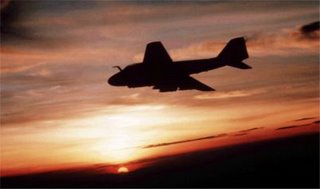
1967-68 was a tough period for the "Buckeyes" of VA-85. During that period they lost 8 aircrew, including the XO. Flying the A-6A and, in some cases the A-6B (which was modified for SAM supression) the Intruder crews were given some of the hardest targets to attack in North Vietnam. Typically they were deep in country and heavily defended. The A-6, with it's all weather day/night capabilities usually ended up flying aginst the hardest targets at night. The final mission for (then) LtJG Plowman (B/N) and his pilot, LCDR John Ellison (who was also the squadron Ops Officer) was flying SAM supression -- here is a summary of their mission (courtesy The Virtual Wall):

On 24 March, LCDR John "Buzz" Ellison and LTJG Jim Plowman launched in A-6A BuNo 151587 as part of a strike force directed against the Bac Giang thermal power plant in North Vietnam. The target was heavily defended by SAMs and a full spectrum of conventional anti-aircraft weaponry. Ellison and Plowman were tasked with SAM suppression for the bombers. After the strike was completed, friendly radar flight following tracked the BUCKEYE aircraft as it headed toward the Gulf of Tonkin, but the track terminated in the vicinity of Ha Bac Province near the Vietnam/China border. Combat SAR was initiated. Voice contact was achieved with LCDR Ellison, but neither he nor Plowman was rescued. Both men were placed in "Missing in Action" status.

The North Vietnamese never acknowledged capturing either Ellison or Plowman, nor did they report that either man had been killed. The two men simply disappeared.

Even so, the two men were never placed in POW status, and on Thursday, 04/18/1974, the Secretary of the Navy approved a Presumptive Finding of Death for now-Lieutenant Commander Plowman, changing his status to "Died while Missing".

Between 1993 and 1996, joint U.S.-Socialist Republic of Vietnam (S.R.V.) teams, led by the Joint POW/MIA Accounting Command (JPAC), conducted three investigations in the province. The team interviewed two local villagers who saw the 1967 crash, and both men recalled seeing human remains at the site. The team also surveyed the purported crash site and found several small fragments of aircraft wreckage. In 1996, another joint U.S./S.R.V. team excavated the suspected crash site. The team found human remains from amid the scattered wreckage. The team was also handed some remains by a local villager who claimed to have recovered it while scavenging the crater for metal.

I observed the service Wednesday by happenstance -- the building I work in now sits to one side of Arlington, and not a day passes by but that I see another burial procession enroute to the final resting place. The size of the detail varies, but I can say that from personal experience (being the senior Navy rep for the detail) the degree of solemnity and honor according the deceased is the same from the accompanying detail. On those occasions I will stop, come to attention and hold a salute until the detail passes. The usual background busy noise of this area of DC seems to recede and I hear clearly the sound of the caisson's horses hoofs on the pavement.

There are some remembrances posted on the Virtual Wall website -- here is one from one of his fraternity brothers:

To all of us he was Jim not James, though he assigned nicknames to most of us. I became "Seagull" because of my Utah background as we trooped though out pledge year gaining acceptance as men yet still boys making our way into an unknown world, sharing the days of the Kennedy Assasination, the occasional nights of fraternity partying and many hours of study deep in the bowels of Suzallo Library.


Perhaps more than most of us, Jim knew where he was headed. His pride in ROTC showed in the crispness of his uniform and his devotion to his faith. But he still was one of us, giving and gaining strength in the periods of indecision we all shared. Jim was one of two of my 24 pledge brothers who didn't return. I learned of both while in Basic Training, a few miles, yet great gaps apart from where he was raised.


And today as the others age, Jim lives on in scrap- and yearbook photos, memories and occasional dreams as a young red headed guy. And Jim lives in history for his nobility.

-- From a Fraternity Brother and friend,Kent Carthey

For almost twenty years a family has had to live with the open-ended question of "what if" that even a "Died while Missing" status conveys. Now they can finally close that book -- welcome home...

UNDER the wide and starry sky
Dig the grave and let me lie:
Glad did I live and gladly die,
And I laid me down with a will.

This be the verse you 'grave for me:
Here he lies where he long'd to be;
Home is the sailor, home from the sea,
And the hunter home from the hill.
- Robert Louis Stevenson
('Requiem' from Underwoods)